Vision Health: Everyday Habits and Nutrients to Support Your Eyesight for Life
Disclaimer: These statements have not been evaluated by the FDA. This product is not intended to diagnose, treat, cure, or prevent any disease.
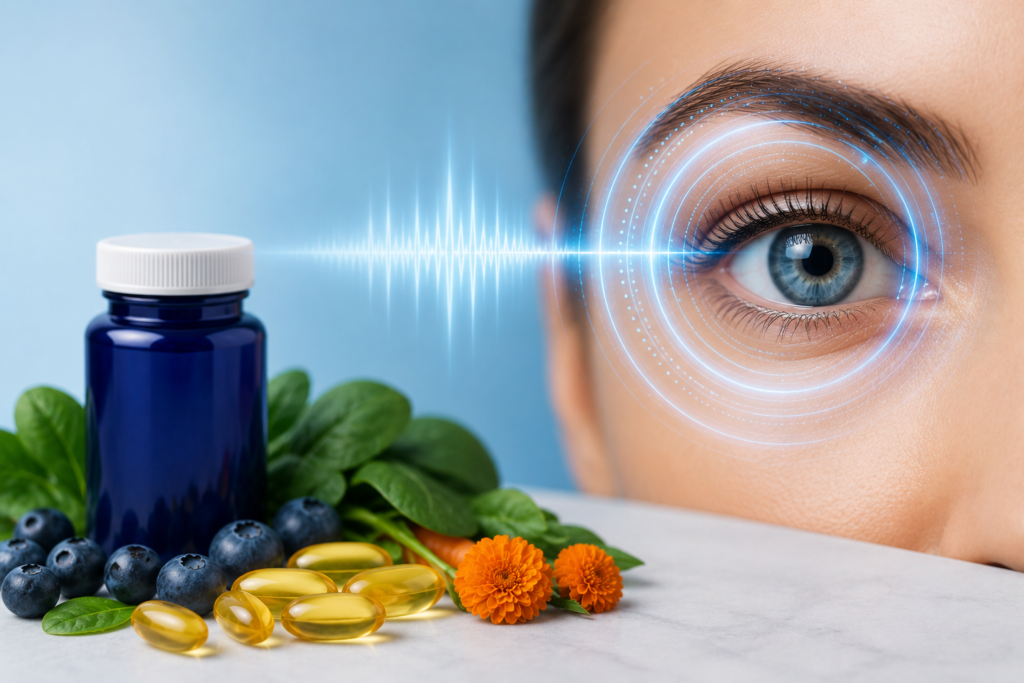
Think about everything your eyes do for you in a single day. From the moment you wake up and check your phone to the last page of a book before bed, your visual system works without pause — processing colors, depth, motion, and detail in real time. Yet despite how central eyesight is to daily life, most of us rarely think about supporting our eye health until something goes wrong.
The truth is, vision health is deeply connected to overall wellness. The foods you eat, the lifestyle habits you keep, the amount of time you spend in front of screens — all of these play a role in how well your eyes function today and how they age over the decades ahead. The encouraging news is that many of the factors influencing long-term eye wellness are within your control.
In this article, we’ll explore the key elements of a vision-friendly lifestyle: what threatens eye health, which nutrients are most relevant to the visual system, and how you can build daily habits that support your eyesight at every stage of life.
How the Eyes Work: A Brief Look Inside
The eye is one of the most complex and delicate organs in the human body. Light enters through the cornea, passes through the pupil, and is focused by the lens onto the retina — a thin layer of light-sensitive tissue at the back of the eye. The retina contains two types of photoreceptor cells: rods, which handle low-light and peripheral vision, and cones, which are responsible for color and fine detail.
At the center of the retina is a small but crucial area called the macula. It is responsible for sharp, central vision — the kind you use to read, drive, recognize faces, and see fine detail. Surrounding the macula is an area rich in pigment made up of carotenoids like lutein and zeaxanthin, which help filter harmful light and protect the delicate structures beneath.
Signals from the retina travel through the optic nerve to the brain, which processes everything you “see.” This entire system requires constant nourishment — healthy blood flow, adequate oxygen, and specific nutrients — to function at its best.
What Threatens Eye Health?
Several factors can put the visual system under stress over time. Understanding them is the first step toward making more protective choices.
Digital Eye Strain
If you spend hours each day staring at a screen — whether it’s a computer, smartphone, or tablet — you may already be familiar with the fatigue, dryness, or blurred vision that can follow a long session. This collection of symptoms is often referred to as digital eye strain or computer vision syndrome, and it affects a large and growing portion of the population.
Blue light emitted by digital screens has drawn significant attention in recent years. While research on its long-term effects is still evolving, many eye health professionals recommend taking regular screen breaks and being mindful of screen exposure, especially in the hours before sleep.
The 20-20-20 rule is a widely recommended habit: every 20 minutes, look at something at least 20 feet away for at least 20 seconds. This simple practice gives your eyes a chance to relax and refocus.
Ultraviolet (UV) Light Exposure
Sunlight is essential for overall health, but prolonged, unprotected exposure to UV radiation can be damaging to the eyes. UV rays have been linked in research to accelerated changes in the lens and retina over time. Wearing quality sunglasses that block 100% of UVA and UVB rays is one of the simplest and most effective ways to protect your eyes outdoors.
Oxidative Stress
The retina is one of the most metabolically active tissues in the body, which means it produces a significant amount of oxidative byproducts. Over time, oxidative stress can affect the health of eye cells and structures. This is one reason why antioxidant nutrients play such a prominent role in eye health research.
Poor Circulation
Like other tissues in the body, the eyes depend on healthy blood flow to receive oxygen and nutrients. Factors that compromise cardiovascular health — such as a sedentary lifestyle, poor dietary habits, or elevated blood sugar — can also affect the tiny blood vessels that serve the eyes.
Aging
As with many aspects of health, the visual system changes with age. The lens becomes less flexible, making it harder to focus on close objects — a condition known as presbyopia that affects most people by their mid-40s. The risk of other age-related eye changes also increases over time, making the years leading up to and through middle age an ideal window for investing in proactive eye care habits.
Key Nutrients for Eye Health
A growing body of nutritional research has explored how specific vitamins, minerals, and plant compounds support the health of the visual system. While no supplement replaces a balanced diet or professional eye care, certain nutrients have emerged as particularly relevant to eye wellness.
Lutein and Zeaxanthin
These two carotenoids are found in high concentrations in the macula and are sometimes called the “eye vitamins.” They function as natural filters for high-energy blue light and help defend retinal cells against oxidative stress. The human body cannot produce lutein or zeaxanthin on its own — they must come from diet or supplementation.
Rich dietary sources include leafy greens such as kale, spinach, and collard greens, as well as eggs, corn, and orange bell peppers. Many eye health supplements include these carotenoids as core ingredients.
Vitamin A and Beta-Carotene
Vitamin A is essential for the production of rhodopsin, a pigment in the rod cells that enables low-light vision. A diet sufficient in vitamin A and its precursor beta-carotene supports normal visual function, especially in dim conditions. Sweet potatoes, carrots, and dark leafy greens are excellent sources.
Omega-3 Fatty Acids
The retina has a high concentration of DHA, an omega-3 fatty acid that plays a structural role in cell membranes. Dietary omega-3s, found abundantly in fatty fish like salmon, mackerel, and sardines, are associated in research with supporting tear production and overall eye surface comfort. For those who don’t regularly eat fish, algae-based omega-3 supplements offer a plant-based alternative.
Vitamin C
This powerful antioxidant is found in high concentrations in the aqueous humor, the fluid inside the eye. Vitamin C may help protect eye tissues from oxidative damage. Citrus fruits, strawberries, bell peppers, and broccoli are all excellent dietary sources.
Vitamin E
Another antioxidant with relevance to eye health, vitamin E is found in nuts, seeds, and vegetable oils. It works alongside vitamin C and other antioxidants to help protect cell membranes from oxidative damage.
Zinc
Zinc is present in high concentrations in the retina and plays a role in the activity of antioxidant enzymes in eye tissue. It is found in foods like oysters, red meat, pumpkin seeds, and legumes.
B Vitamins
Certain B vitamins — particularly B6, B9 (folate), and B12 — have been studied for their role in supporting healthy homocysteine levels, which in turn may support healthy blood vessels throughout the body, including those serving the eyes.
Building a Vision-Friendly Lifestyle
Nutritional support is most effective when it’s part of a broader, health-focused lifestyle. Here are practical habits that can help you take better care of your eyes every day.
Prioritize a Colorful, Whole-Food Diet
A diverse diet rich in fruits, vegetables, lean proteins, and healthy fats naturally delivers many of the nutrients most associated with eye wellness. Think beyond salads: roasted sweet potatoes, a handful of walnuts, a piece of salmon, or a smoothie with spinach and berries are all easy, delicious ways to nourish your visual system.
Protect Your Eyes from the Sun
Make UV-protective sunglasses a daily habit — not just at the beach. Look for sunglasses labeled 100% UV protection or UV400. Wide-brim hats offer an added layer of protection on especially sunny days.
Manage Screen Time Thoughtfully
Practice the 20-20-20 rule, increase text size if you find yourself squinting, ensure good lighting in your workspace, and consider reducing screen brightness in the evening. These adjustments can meaningfully reduce eye fatigue over time.
Stay Hydrated
Adequate hydration supports the production of tears, which are essential for keeping the surface of the eye moist, comfortable, and clear. Dry indoor air — common in air-conditioned or heated spaces — can exacerbate dry eye discomfort, so staying well-hydrated and using a humidifier when needed can help.
Don’t Smoke
Smoking is one of the most well-documented lifestyle factors associated with adverse effects on eye health. If you currently smoke, quitting is one of the most impactful steps you can take for your overall wellness, including your vision.
Exercise Regularly
Regular physical activity supports cardiovascular health, which in turn promotes healthy circulation to the eyes and throughout the body. Even moderate activity — a 30-minute walk most days of the week — offers meaningful benefits.
Prioritize Sleep
During sleep, your eyes recover and restore themselves. Chronic sleep deprivation can contribute to eye fatigue, dryness, and discomfort. Aiming for 7–9 hours of quality sleep each night is one of the most underrated things you can do for your overall health, eyes included.
Get Regular Eye Exams
Annual or biennial comprehensive eye exams are essential — not just for updating your glasses or contact lens prescription, but for monitoring the overall health of your eyes. Many changes in the visual system develop gradually and without obvious symptoms, making routine professional evaluation an important part of any proactive health strategy.
Supporting Eye Health with Supplements
For individuals who find it difficult to consistently get all vision-supportive nutrients through food alone, a well-formulated eye health supplement can be a convenient complement to a balanced diet.
When evaluating an eye health supplement, consider the following:
- Clinically studied ingredients at meaningful dosages — look for lutein, zeaxanthin, vitamins C and E, zinc, and omega-3s
- Third-party testing for purity and potency
- Transparent labeling with no proprietary blends that obscure individual ingredient amounts
- GMP-certified manufacturing to ensure quality standards
As always, speak with a healthcare professional before adding any supplement to your routine, especially if you are pregnant, nursing, take medications, or have existing health conditions.
Dietary supplements are intended to support general health and wellness. They are not intended to diagnose, treat, cure, or prevent any disease.
A Long-Term Investment Worth Making
Your eyes are with you for life. Every decade brings new demands on your visual system — more screen time, more UV exposure, the natural processes of aging — and the choices you make now can influence how well your eyes serve you in the decades to come.
The foundation is straightforward: eat a nutrient-rich, colorful diet; protect your eyes from UV and excessive screen exposure; stay active; sleep well; and keep up with regular eye exams. If you choose to complement these habits with a high-quality supplement, make sure it’s one grounded in real nutritional science and made by a brand you can trust.
Good vision isn’t something to take for granted. It’s something worth protecting, nourishing, and investing in — one healthy habit at a time.
These statements have not been evaluated by the FDA. This product is not intended to diagnose, treat, cure, or prevent any disease. Always consult with a qualified healthcare professional before beginning any new supplement or wellness regimen.
As an affiliate, I may earn a commission from purchases made through the links in this article, at no additional cost to you.